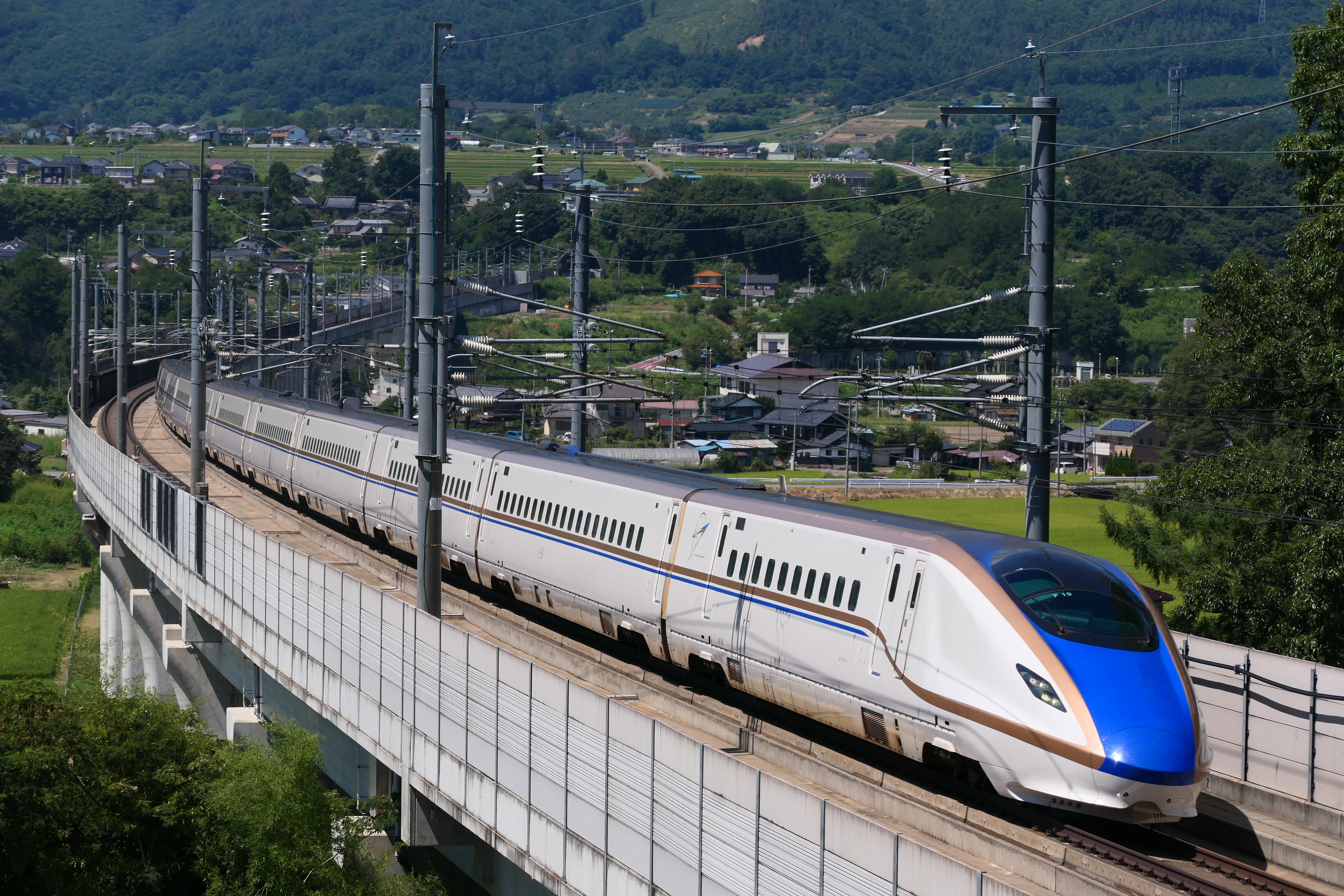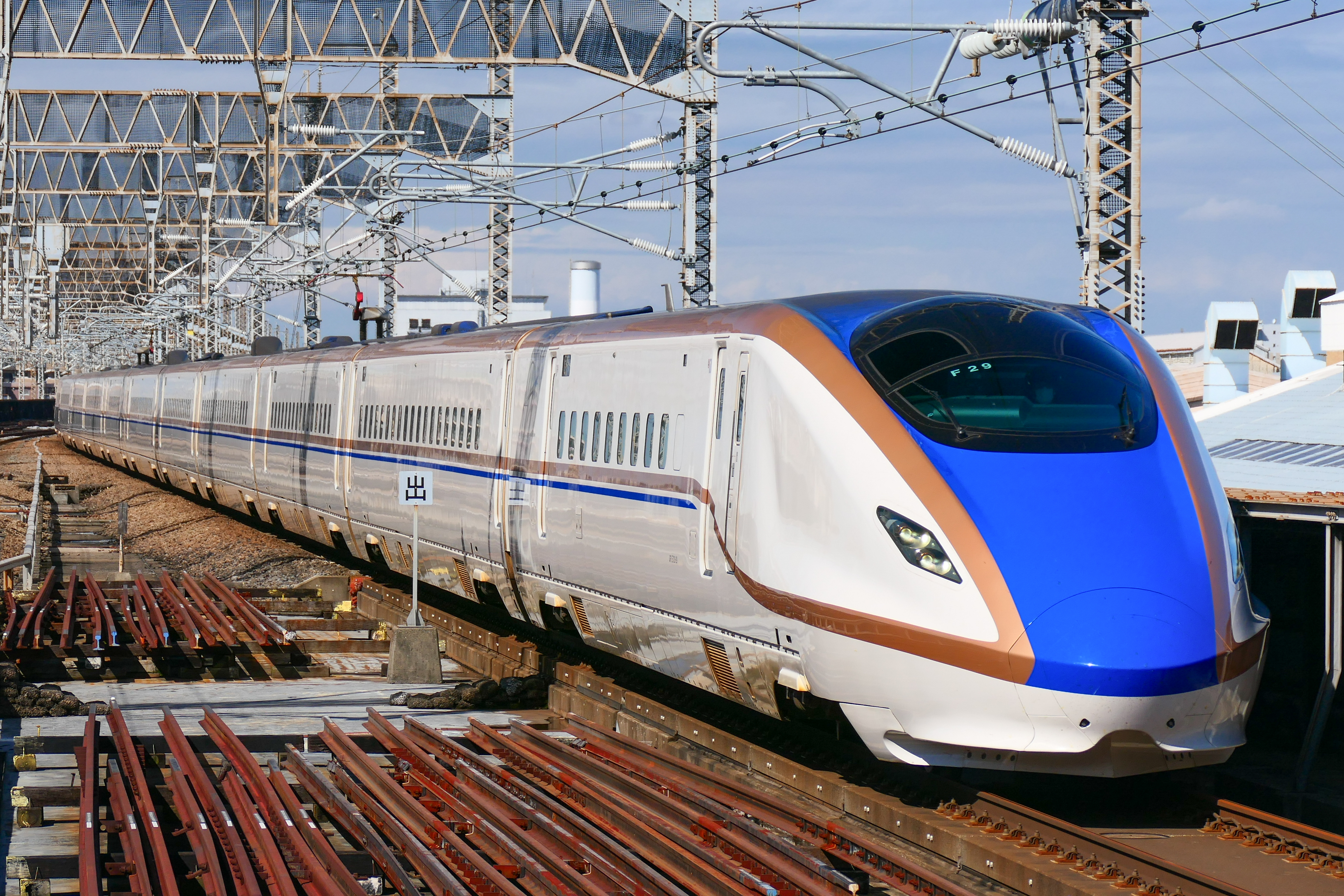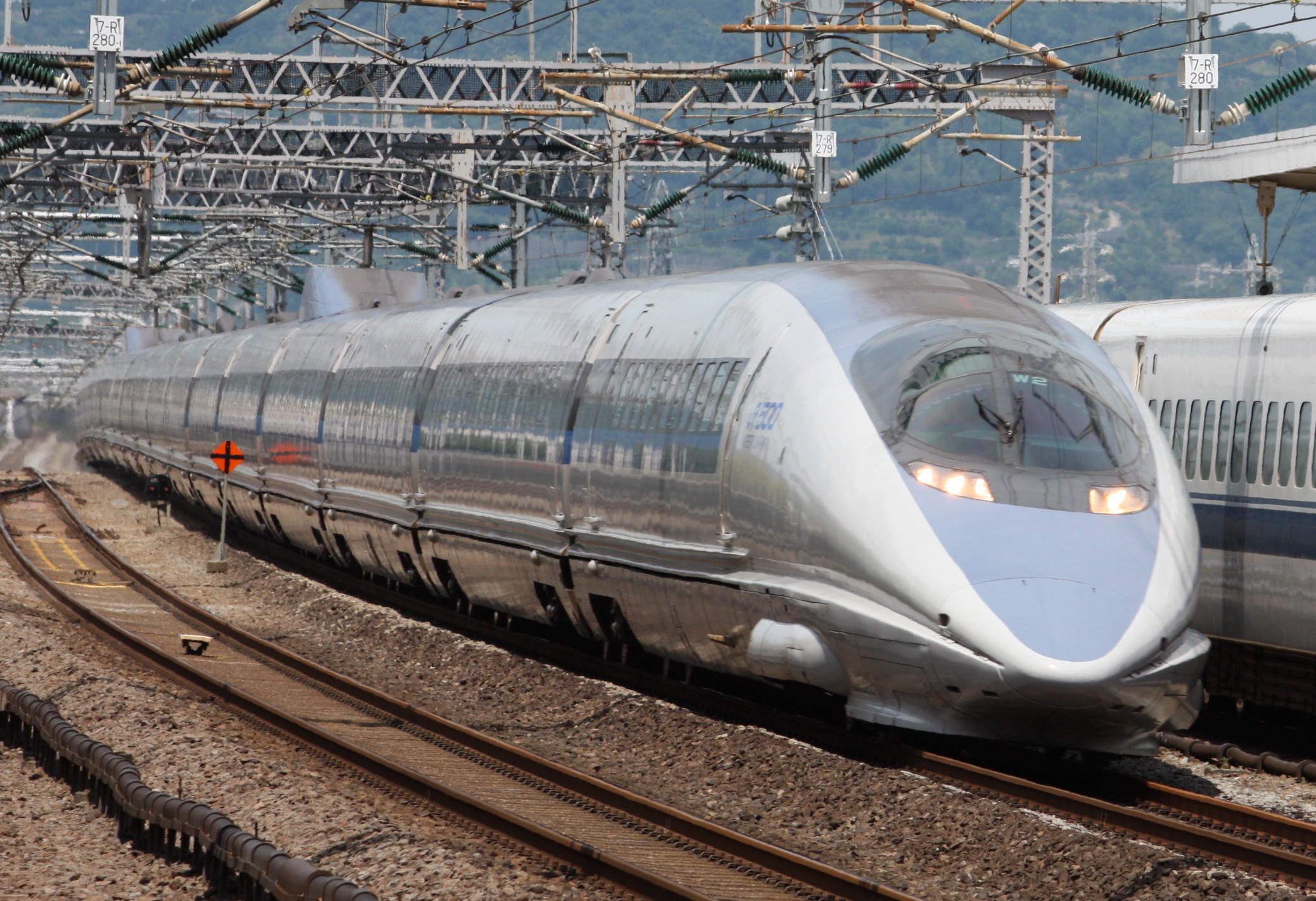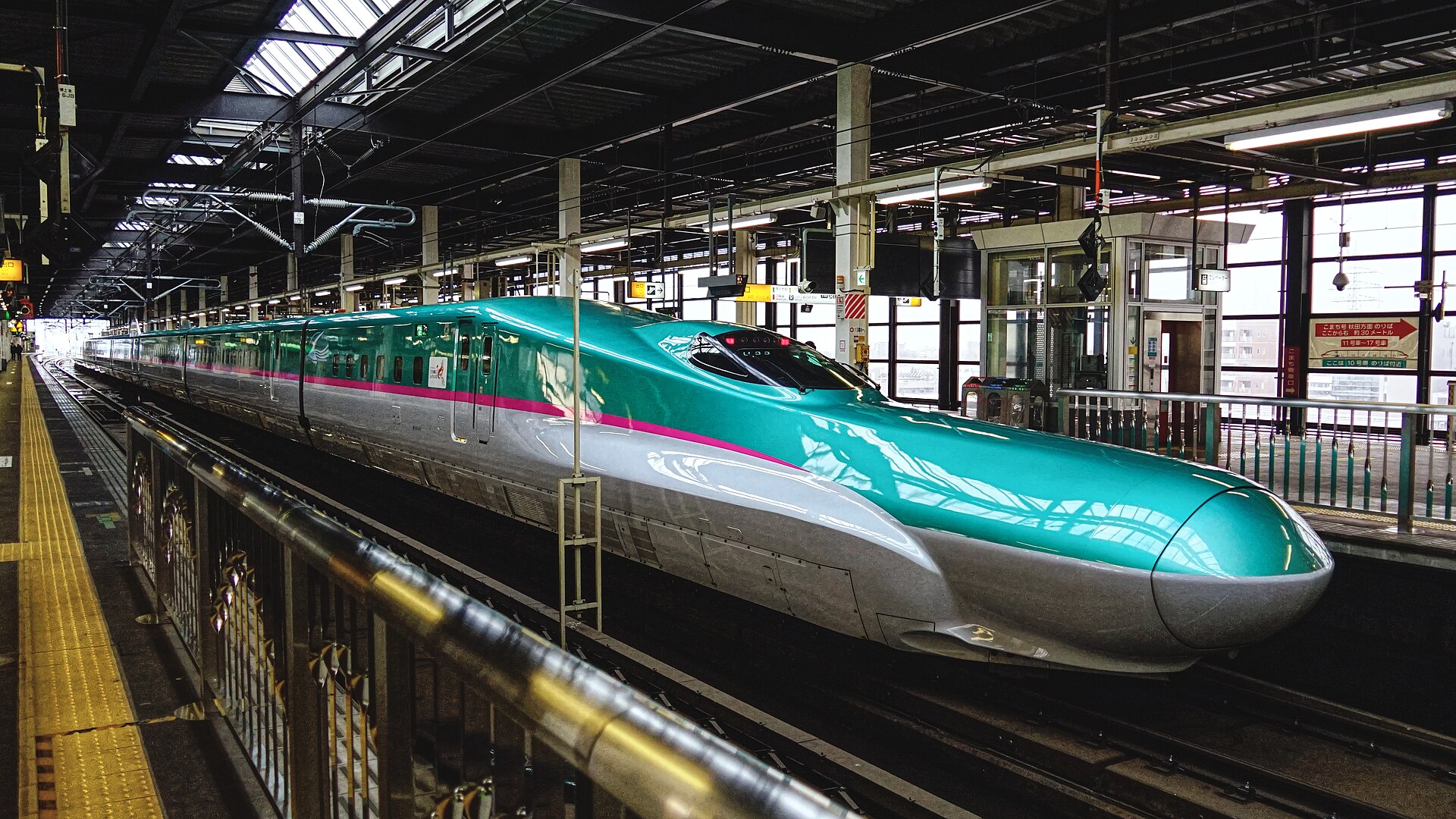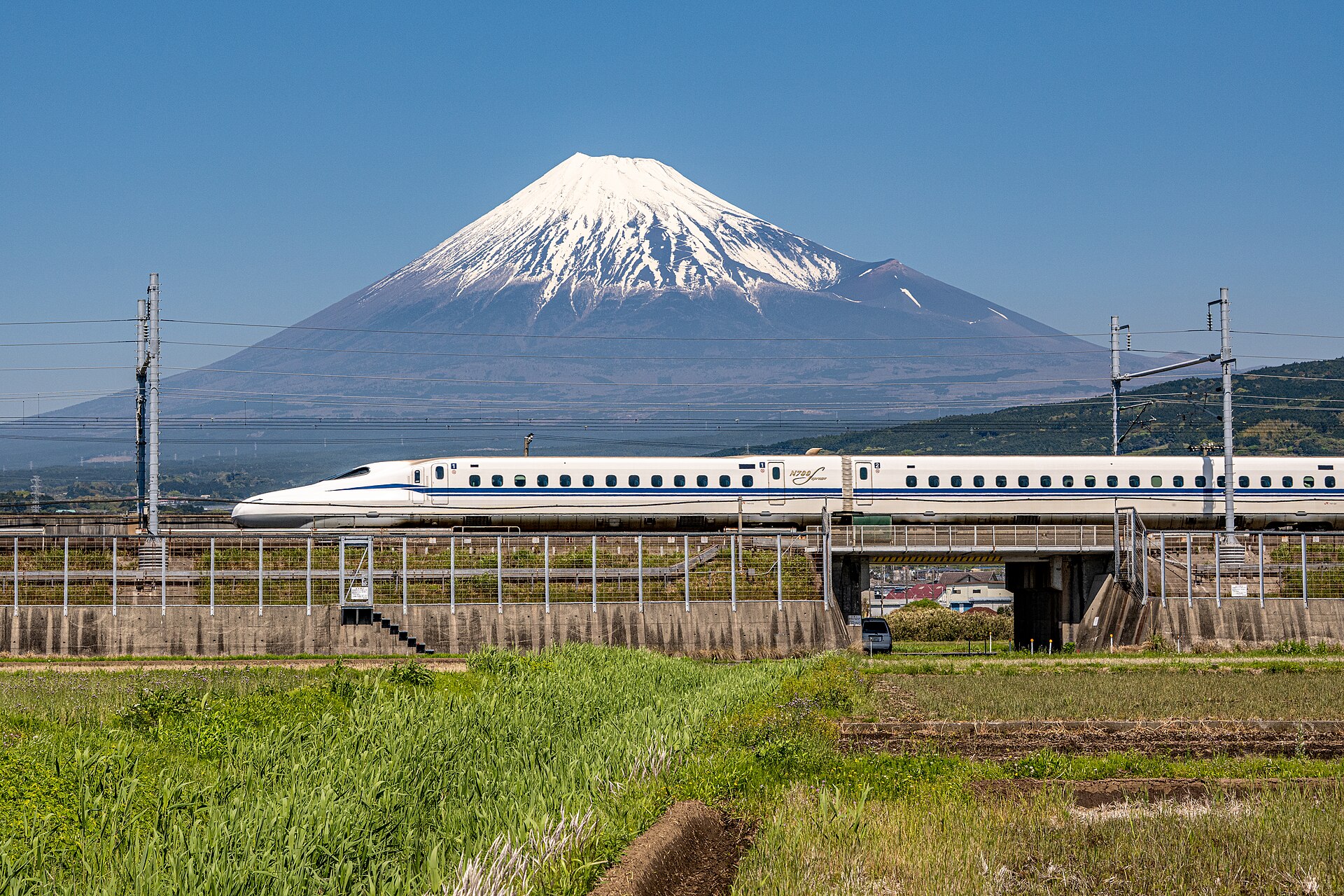
An N700S series Shinkansen on the Tokaido line at Higashi-Tagonoura, with Mount Fuji rising behind it.

Japan · High-speed

Tokaido Shinkansen: Tokyo to Shin-Osaka

The Tokaido Shinkansen links Tokyo and Shin-Osaka in 2 hours 21 minutes by the fastest Nozomi service, running at up to 285 km/h along the corridor that carries most of Japan's intercity traffic. It was the world's first high-speed railway when it opened in 1964, and it remains an ordinary way to travel rather than a special excursion: trains leave every few minutes, the ride is quiet and level, and the whole journey is timetabled to the minute.

Tokyo → Osaka

2h 21m

Photo: Takeshi Aida / Wikimedia Commons · CC BY-SA 2.0

City pair
Tokyo → Osaka

Published primary route

Scheduled time
2h 21m

Published end-to-end time

Distance
Not verified

No verified figure published

Operator
Central Japan Railway Company (JR Central)

Check the selected service before travel

Route & corridor

Tokyo → Osaka

Engineering-led corridor. The map, ordered calls and any engineering detail shown below come from the published route record.

From Tokyo the line runs south-west through Shin-Yokohama, along the Pacific side of Honshu past Shizuoka and Hamamatsu, inland to Nagoya, then through Kyoto to Shin-Osaka. Fastest journey time is 2 hours 21 minutes.

Tokyo to Osaka

Key stops

Tokyo StationShin-Yokohama StationNagoya StationKyoto StationShin-Osaka Station

Tokyo StationShin-Osaka StationShin-Yokohama StationNagoya StationKyoto Station
Japan · geographic corridor through verified stops · indicative alignment, not exact track geometry
  1. Tokyo Station

    Japan

  2. Shin-Yokohama Station

    Japan

  3. Nagoya Station

    Japan

  4. Kyoto Station

    Japan

  5. Shin-Osaka Station

    Japan

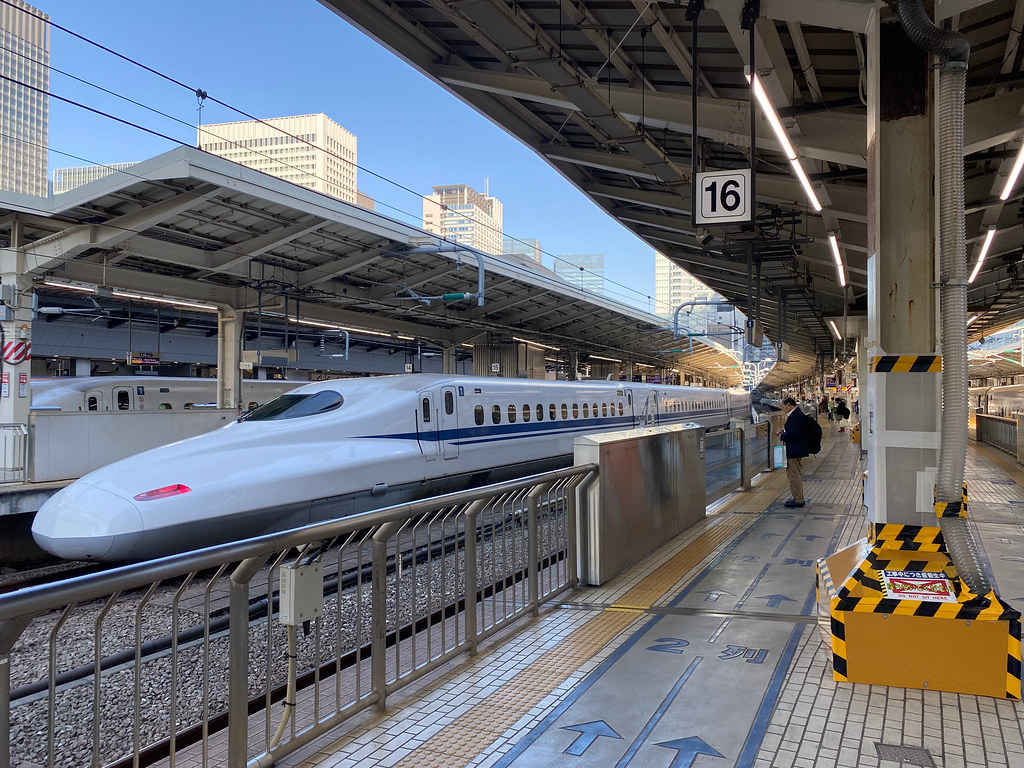
An N700 Tokaido Shinkansen train at Tokyo Station.
An N700 Tokaido Shinkansen train at Tokyo Station. · Photo: がくせエ · CC0

Why this connection

Why this route matters

This is the line that started high-speed rail, and it still shows what the idea is for; two of Japan's largest cities joined in the time it takes to have lunch, on a service so frequent that people use it like a metro. The route passes Mount Fuji on the northern side of the train between Tokyo and Nagoya on clear days, and calls at Kyoto on the way into Osaka, so a single ticket can join three of the country's defining cities. It is worth taking for the ordinariness as much as the speed: a 285 km/h railway operating as routine public transport.

How it scores

Our current editorial assessment, for comparing journeys, a considered judgement, not a measurement.

SceneryModerate
ComfortStrong
Food & drinkModerate
Character of the trainStrong
Show the full editorial profile

More subjective

UniquenessStrong
Iconic statusStrong
PhotographyModerate
Travelling with childrenStrong

Not rated yet: value for money, seat quality, onboard service, slow travel quality, romance, remoteness.

Step-free access and assistance are set out with the practical detail further down rather than reduced to a score.

The train in service

What the speed feels like aboard

Only confirmed onboard details and photographs tied to this service appear here. Unrecorded facilities remain unknown.

It is a modern high-speed service, which makes the journey feel less like an expedition and more like the country being handed to you in fast-forward. At a few hours between Tokyo and Osaka, it is long enough to feel like a journey and short enough to watch the whole of it without losing concentration. Calls at Shin-Yokohama Station and Nagoya Station break the run into recognisable stages rather than one undifferentiated stretch.

Views & seating

Reclining seats

Green Car and ordinary car seats recline, with a synchronized comfort-seat design in the Green Car.

✓ Yes

Connectivity & power

Wi-Fi

Wireless LAN is available on board between Shin-Osaka and Tokyo.

✓ Yes

Power sockets

Outlets are at every seat on N700S trains, but on N700A/N700 trains only Green Car seats and window/end ordinary-car seats have outlets.

Conditional

Access & practical

Step-free boarding

Trains include a reservable wheelchair-accessible seat and a multipurpose room primarily for disabled passengers.

✓ Yes

Luggage storage

JR Central notes seats near car #11 rows 12 and 13 are slightly narrower on N700S; oversized baggage handling is governed by separate reservation rules on the operating railway.

Conditional

Family area

A multipurpose room can be used for purposes such as nursing a baby, with priority given to passengers with disabilities.

✓ Yes

Also onboard

Premium seating

A First Class Car (Green Car) with reserved seating is offered separate from ordinary reserved and non-reserved cars.

✓ Yes

7 onboard details are confirmed against a source. Anything not listed here has not been researched yet; treat it as unknown, not absent.

Evidence on demand

Practical reality

Route, onboard, season, fit and booking detail remain available without interrupting the journey above. Unknowns stay visible.

Time & itinerary

2h 21m

From Tokyo the line runs south-west through Shin-Yokohama, along the Pacific side of Honshu past Shizuoka and Hamamatsu, inland to Nagoya, then through Kyoto to Shin-Osaka. Fastest journey time is 2 hours 21 minutes.

View route map and verified stops

Tokyo → Shin-Osaka

From Tokyo the line runs south-west through Shin-Yokohama, along the Pacific side of Honshu past Shizuoka and Hamamatsu, inland to Nagoya, then through Kyoto to Shin-Osaka. Fastest journey time is 2 hours 21 minutes.

Tokyo to Osaka

Key stops

Tokyo StationShin-Yokohama StationNagoya StationKyoto StationShin-Osaka Station

Tokyo StationShin-Osaka StationShin-Yokohama StationNagoya StationKyoto Station
Japan · geographic corridor through verified stops · indicative alignment, not exact track geometry
  1. Tokyo Station

    Japan

  2. Shin-Yokohama Station

    Japan

  3. Nagoya Station

    Japan

  4. Kyoto Station

    Japan

  5. Shin-Osaka Station

    Japan

On board

It is a modern high-speed service, which makes the journey feel less like an expedition and more like the country being handed to you in fast-forward. At a few hours between Tokyo and Osaka, it is long enough to feel like a journey and short enough to watch the whole of it without losing concentration. Calls at Shin-Yokohama Station and Nagoya Station break the run into recognisable stages rather than one undifferentiated stretch.

Views & seating

Reclining seats

Green Car and ordinary car seats recline, with a synchronized comfort-seat design in the Green Car.

✓ Yes

Connectivity & power

Wi-Fi

Wireless LAN is available on board between Shin-Osaka and Tokyo.

✓ Yes

Power sockets

Outlets are at every seat on N700S trains, but on N700A/N700 trains only Green Car seats and window/end ordinary-car seats have outlets.

Conditional

Access & practical

Step-free boarding

Trains include a reservable wheelchair-accessible seat and a multipurpose room primarily for disabled passengers.

✓ Yes

Luggage storage

JR Central notes seats near car #11 rows 12 and 13 are slightly narrower on N700S; oversized baggage handling is governed by separate reservation rules on the operating railway.

Conditional

Family area

A multipurpose room can be used for purposes such as nursing a baby, with priority given to passengers with disabilities.

✓ Yes

Also onboard

Premium seating

A First Class Car (Green Car) with reserved seating is offered separate from ordinary reserved and non-reserved cars.

✓ Yes

7 onboard details are confirmed against a source. Anything not listed here has not been researched yet; treat it as unknown, not absent.

When to go
  1. JanGood
  2. FebGood
  3. MarGood
  4. AprGood
  5. MayGood
  6. JunGood
  7. JulGood
  8. AugGood
  9. SepGood
  10. OctGood
  11. NovGood
  12. DecGood
  • Good
Year-round
Good

Jan: Scheduled year-round as a regular timetabled service.

Month-by-month notes
  • Jan: Scheduled year-round as a regular timetabled service.
  • Feb: Scheduled year-round as a regular timetabled service.
  • Mar: Scheduled year-round; this is a busier travel period, so book earlier.
  • Apr: Scheduled year-round; this is a busier travel period, so book earlier.
  • May: Scheduled year-round as a regular timetabled service.
  • Jun: Scheduled year-round as a regular timetabled service.
  • Jul: Scheduled year-round as a regular timetabled service.
  • Aug: Scheduled year-round; this is a busier travel period, so book earlier.
  • Sep: Scheduled year-round as a regular timetabled service.
  • Oct: Scheduled year-round; this is a busier travel period, so book earlier.
  • Nov: Scheduled year-round; this is a busier travel period, so book earlier.
  • Dec: Scheduled year-round as a regular timetabled service.
Good for

Good fit for

  • Solo travellers

    Especially good

    Frequent departures and assigned seating make solo travel straightforward, with no need to plan around a single daily train.

  • First-time rail travellers

    Especially good

    A frequent, clearly signed, reservable service between major cities; one of the easiest ways to make a first long-distance journey in the country.

  • Rail enthusiasts

    Especially good

    A working high-speed railway running at its designed speed on purpose-built infrastructure rather than upgraded classic line.

  • Families

    Good fit

    Short journey, level boarding at the principal stations and toilets on board; luggage space is the usual constraint at busy times.

Also works for 2 more
  • Couples

    Comfortable paired seating and a short journey, though this is transport rather than an occasion in itself.

  • Older travellers

    Step-free access at the principal stations and a seated, reserved journey with no changes.

Think twice if

  • Less suitable for slow travellers

    The point of this route is speed; travellers looking for a long, unhurried journey will find it over quickly.

Reservation & booking
Reservation
Not required
Price
Dynamic pricing

Prices quoted No fixed published fare. Tickets are sold at operator-set fares that vary by date, service and how far ahead you book; check the operator for the price on your travel date.

Booking difficulty
Easy
Rail pass
Accepted
  • Trains run every few minutes and can be booked online or at the station.
  • The Japan Rail Pass covers Hikari and Kodama; Nozomi requires JR Central's supplementary ticket, bought at a machine or counter rather than online in advance.
  • No extra reservation is needed with a rail pass.

We link to the operator's own journey page. No direct booking channel has been verified for this service, so availability and fares must be checked there. Journey length: 2h 21m. Checked 11 Sep 2026 · Central Japan Railway Company (JR Central).

Sources & freshness

The detailed source record remains at the end of this guide. Review the evidence.

Your next step

Choose the service, then confirm it with the operator.

Trains run every few minutes and can be booked online or at the station. The Japan Rail Pass covers Hikari and Kodama; Nozomi requires JR Central's supplementary ticket, bought at a machine or counter rather than online in advance. No extra reservation is needed with a rail pass.

Official journey information, Central Japan Railway Company (JR Central) (opens in a new tab)

We link to the operator's own journey page. No direct booking channel has been verified for this service, so availability and fares must be checked there.

Far by Rail is a discovery guide, not a live timetable or booking service. Confirm times, fares and availability with the operator.

Continue exploring

Other fast city connections

Sources & freshness

Journey information is reviewed against published material and maintained as sources change.

Last reviewed 11 Sep 2026.

Official sources